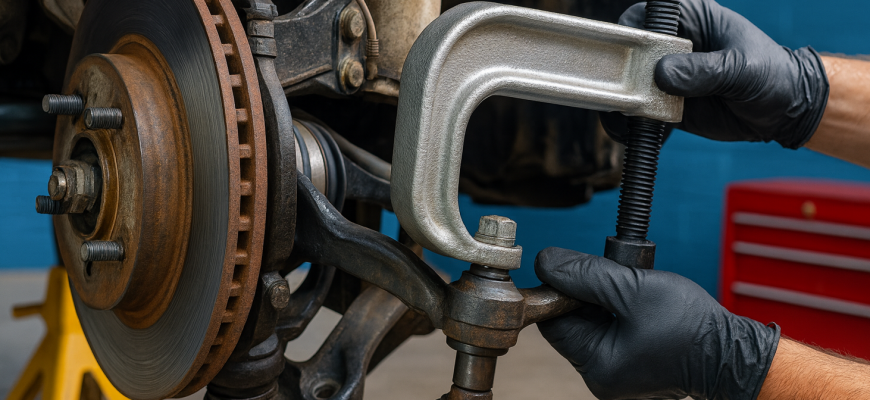
Ball joints may be small parts, but they play a big role in your vehicle’s suspension and steering. These spherical bearings connect the wheel hubs to the suspension control arms, allowing smooth wheel movement and steering. When a ball joint wears out, it can cause clunking noises and unsafe driving conditions. Most vehicles will need ball joint replacement at some point — often after tens of thousands of miles of driving. Replacing a bad ball joint promptly is critical for safety, but what does that repair entail and how much should you expect it to cost? This article will explain what ball joints do, the warning signs of failure, and what factors influence the ball joint replacement cost.
What Are Ball Joints and Why Do They Matter?
A ball joint is a pivot point in your car’s suspension that works like a ball-and-socket. It allows the suspension to move up and down while keeping the wheel securely attached and aligned. In simple terms, ball joints connect the wheels to your steering and suspension system, allowing you to steer while the wheels move with the suspension. A typical front wheel has a ball joint linking the wheel assembly to the control arm, and this joint is built durable since it constantly bears the vehicle’s weight and absorbs road shocks.
Over time, however, ball joints wear out due to constant motion and stress. The protective rubber boot can crack or tear, letting dirt in and grease out — which accelerates wear. Under normal conditions, a ball joint might last 70,000 to 150,000 miles before it starts to fail. Harsh roads, heavy loads, or off-road driving can shorten its lifespan. When a ball joint becomes excessively worn or loose, it must be replaced to maintain safe steering and prevent further suspension damage.
Signs of a Worn or Failing Ball Joint
Recognizing a bad ball joint early can prevent accidents and expensive repairs. Watch out for these common symptoms:
- Clunking or knocking noises — especially when driving over bumps, often indicating a loose, worn ball joint in the suspension.
- Excessive vibration in the steering wheel — often felt during turns, suggesting the joint is worn and no longer holding the wheel firmly.
- Uneven or rapid tire wear — a loose ball joint can throw off wheel alignment, causing one edge of a tire to wear faster.
- Vehicle pulling to one side or wandering — the car may drift left or right even on straight roads, and steering might feel loose or sloppy.
If you notice any of these issues, have your suspension inspected promptly. Driving with a badly worn ball joint is dangerous — it can result in unpredictable steering and even loss of control. In fact, neglecting a faulty ball joint can lead to reduced vehicle control, damaged tires, and broken suspension components if it fails completely. The sooner you replace a worn ball joint, the safer you’ll be and the less chance of related damage.
Ball Joint Replacement Cost and Factors
How much does it cost to replace a ball joint? It depends on your vehicle and other factors, but replacing a ball joint usually costs a few hundred dollars. Typically it runs around $250 to $500 for one ball joint replacement in a standard car. According to J.D. Power — a consumer research firm known for its automotive analysis — “For mainstream cars, the estimated replacement cost for a single ball joint ranges from $200 to $350, including parts and labor.” Trucks, SUVs, and luxury cars often cost more, sometimes above $350 per joint, due to pricier parts and more complex labor.
Key factors that influence the final cost include:
- Type of ball joint — Non-greaseable (sealed) joints are usually cheaper (around $100–$200 for the part) but have a limited lifespan, while greaseable joints cost more (about $150–$350 each) but can be lubricated to last longer.
- Vehicle make/model — Luxury or performance models with complex suspensions have more expensive parts and often require extra labor, so their ball joint replacements can exceed $350 each. Common sedans and trucks usually fall in the lower range.
- Design and labor — Press-in ball joints require special tools and more time to install, whereas bolt-on ball joints are simpler and quicker to replace. Vehicles with bolt-on joints therefore have lower labor costs. Labor rates vary (~$80–$200/hr) and replacing one joint can take 1–3 hours.
- Additional services — After a new ball joint is installed, a wheel alignment (~$50–$150) is usually needed. If multiple joints are replaced at once, some shops offer discounted labor packages.
The table below summarizes typical ball joint replacement costs in different scenarios:
| Replacement Scenario | Estimated Cost (USD) | Notes |
|---|---|---|
| Single ball joint (standard car) | $200–$350 | Parts and labor for one front ball joint (typical vehicle) |
| Single ball joint (luxury/complex car) | $350–$600+ | Higher cost for upscale or performance models |
| Both front ball joints (pair) | ~$400–$800 | Replacing left and right joints together (some labor savings) |
| Wheel alignment (after replacement) | $50–$150 | Extra service to ensure proper alignment post-repair |
Finally, note that attempting a ball joint replacement yourself could save money if you have the proper tools and skills, but for most drivers it’s safer to have a qualified mechanic do the job. Professional installation ensures the new joint is fitted correctly and that the suspension is aligned afterward.
Staying Safe and Saving Money
Ball joints are humble components, but they are critical for keeping your vehicle stable and steerable. When a ball joint fails, it should not be ignored. By catching early warning signs like clunking noises or uneven tire wear, you can replace a bad ball joint before it leads to bigger problems. A ball joint replacement typically costs a few hundred dollars, but it’s a smart investment in your car’s safety. Get detailed cost estimates for your vehicle (and a second opinion if needed), and use quality parts so the new joint lasts. Timely ball joint replacements can ultimately save you money by preventing more extensive suspension damage and expensive repairs later on.