The suspension system — including shock absorbers (“shocks”) and struts — keeps UAE cars safe and comfortable. Shocks and struts cushion bumps and maintain tire contact on rough roads, so worn units can make a ride jarring or unsafe. For everyday drivers in UAE cities and highways, keeping these parts in good shape is crucial for comfort and control. This guide explains what shocks and struts are, how to tell when they need replacing, and what replacement typically costs in the UAE.
Understanding Shocks vs. Struts
-
Shock Absorbers: Often just called shocks, these hydraulic dampers “cushion much of the impact of bumps and uneven roads”. In other words, shocks convert road bumps into heat, smoothing the ride. They sit inside the suspension (sometimes separate from springs) and keep tires pressed to the road.
-
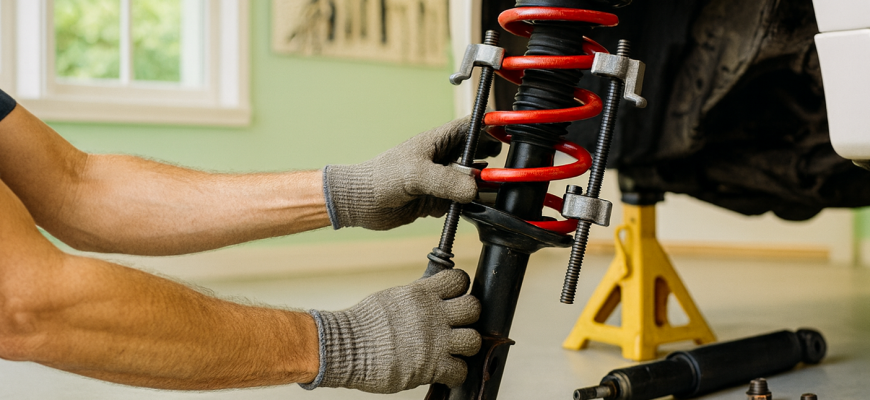
Strut Assemblies: A strut is basically a combined unit that includes a shock absorber plus a coil spring and mounting hardware. In many modern cars (especially those with MacPherson front suspension), the strut not only dampens bumps but also supports the vehicle’s weight and maintains alignment. Kelley Blue Book notes struts “help tires stay aligned and keep the car stabilized after hitting a bump”, because they serve as a structural part of the suspension.
The table below compares key aspects of shocks vs. struts:
| Feature | Shock Absorber | Strut Assembly |
|---|---|---|
| Function: | Dampens bumps and maintains tire contact. | Dampens bumps and supports vehicle weight (via spring). |
| Structure: | Separate damper cylinder (no spring included). | Damper plus coil spring and mount (complete unit). |
| Location (common): | Rear suspension or paired with another strut. | Usually front suspension on many cars (MacPherson style). |
| Cost (parts only, each): | ~AED 500–1,500 (varies by vehicle and brand). | ~AED 1,000–3,000 (higher, includes spring). |
| Replacement Interval: | Roughly 80,000–160,000 km (3–5 years) under normal use. | Similar interval; often replaced in pairs for safety. |
In practice, shock absorbers on a typical sedan might each cost a few hundred AED, whereas a front strut (with spring) costs more due to its complexity. Both usually must be changed in pairs (left/right) and followed by a wheel alignment. For example, KBB advises that replacing shocks or struts should be done “in pairs based on front or rear” to keep the vehicle balanced.
Signs of Wear and When to Replace
Even regular drivers should watch for suspension problems. Common symptoms of worn shocks or struts include:
-
Bouncy or Jarring Ride: The car keeps bouncing after going over a bump. When shocks/struts wear out, they lose their ability to dampen effectively, leading to a rough, “jarring” ride.
-
Nose-Diving or Squatting: The front end dives sharply when braking, or the rear squats during acceleration. This tilt under braking indicates uneven support from worn struts.
-
Unusual Noises: Clunking, knocking or rattling when hitting potholes can signal loose or broken suspension parts. (Shocks/struts themselves often make squeaking or clunking sounds when failing.)
-
Visible Fluid Leaks: Oily spots on the strut body or puddles under the wheels mean the hydraulic fluid is leaking, so the absorber can’t dampen. KBB warns that “leaking fluid behind your tires is another sign of something wrong” with shocks/struts.
-
Uneven Tire Wear: Worn shocks/struts allow tires to bounce oddly, causing “cupping” or scalloped wear on the tread. As KBB notes, bad shocks/struts “will prematurely cause more wear and tear” on tires. Inspect your tires: if the tread looks wavy or has lumps, suspension failure is likely.
Regular inspection is wise: most manufacturers recommend checking shocks/struts at every oil change. Typical service life: For normal driving, shocks and struts often last 50,000–100,000 miles (about 80k–160k km) — roughly 3–4 years in the UAE given average use. (A UAE auto guide similarly notes shocks usually last “3 to 4 years” under regular driving, though poor roads or heavy loads can shorten this.) In harsh desert or rough-road conditions, inspect them more frequently. Always replace a failed shock/strut promptly to maintain safety and tire life.
Replacement Costs
The cost to replace shocks or struts depends on several factors:
-
Vehicle type and model: Common cars and sedans are cheapest to fix. Luxury, SUV, or performance models use pricier parts and may have special suspension systems (e.g. adaptive dampers), so expect higher cost.
-
Extent of replacement: You usually replace shocks/struts in axle-matched pairs (both front or both rear). Replacing one side only is not recommended. As SoFi’s Lantern guide notes, suspension components “often come in pairs, which means you’ll need to replace both parts”, raising labor costs. In practice, a garage will quote for both left and right.
-
Parts quality and brand: OEM (dealer) parts cost more than aftermarket. Premium brands or heavy-duty variants cost more, though they may last longer. Cheap generic shocks work short-term but may fail sooner.
-
Labor and alignment: Labor rates vary by shop, but replacing a pair of shocks or struts often takes 1–3 hours total (roughly AED 200–600 in labour). A wheel alignment (~AED 100–200) is usually required after strut work. Complex struts (with springs) take longer to install than simple shocks.
-
Local labor market: Rates can differ between Dubai, Abu Dhabi, etc., but overall UAE labor is relatively high. Get quotes from a few mechanics for a good price.
Accounting for parts and labor, the total bill varies widely by car. For example, a local UAE automotive blog estimates that replacing all shocks and struts on a regular vehicle runs about AED 850–1,000, whereas a luxury or sports car can be AED 1,500 or more. (This matches anecdotal rates: a simple sedan might see ~AED 800–1,200 for two front struts plus labor, while premium SUVs or AWD cars often exceed AED 2,000.)
To illustrate, a comparison:
| Replacement Task | Typical Parts Cost (AED) | Typical Labor (AED) | Total (AED) |
|---|---|---|---|
| Front shocks (pair) | ~1,000–3,000 (for both) | ~300–500 | 1,300–3,500 (approx.) |
| Rear shocks (pair) | ~1,000–2,500 | ~200–400 | 1,200–2,900 |
| Front struts (pair, complete)** | ~2,000–6,000 (for both) | ~400–800 | 2,400–6,800 |
| (Alignment after struts) | — | ~100–150 | ~100–150 |
Note: These are rough ranges. Actual costs depend on your exact car model. Luxury models or cars with air suspension can cost much more.
In summary, budget at least a few thousand AED if both front and rear shocks/struts need replacement. As one UAE source puts it, “the replacement of shocks and struts [for a regular car] cost around AED 850 to AED 1000”. (Always get a detailed quote — some dealers roll alignment and extra parts into their prices, so ensure you know what’s included.)
Ensuring Comfort and Safety on Roads
Struts and shock absorbers are vital for a smooth, safe ride. For UAE drivers, replacing worn shocks/struts restores handling and extends tire life. When symptoms (bouncing ride, noises, tire cupping) appear, plan to replace the worn parts — and do so in matched pairs with an alignment. While parts and labor can add up (often AED 500–1,500 per unit), regular maintenance pays off. As Kelley Blue Book emphasizes, shocks/struts “contribute to a smooth and safe ride”, so timely replacement helps you avoid higher costs from uneven tires, bad handling, or even accidents. Following manufacturer schedules and checking shocks at ~50k–80k km helps keep repair bills predictable. In short, stay on top of suspension wear — it ensures comfort, safety, and control on UAE roads at a reasonable cost.